Choosing Between DC And Northern Virginia Luxury Living
June 11, 2026
June 11, 2026
If you are weighing luxury living in Washington, DC, against Northern Virginia, you are not just choosing a home. You are choosing how you want your days to feel, how you want to move through the region, and what kind of setting best supports your lifestyle. For many buyers and sellers, the real decision comes down to walkability, privacy, architecture, commute style, and long-term ownership considerations. Let’s dive in.
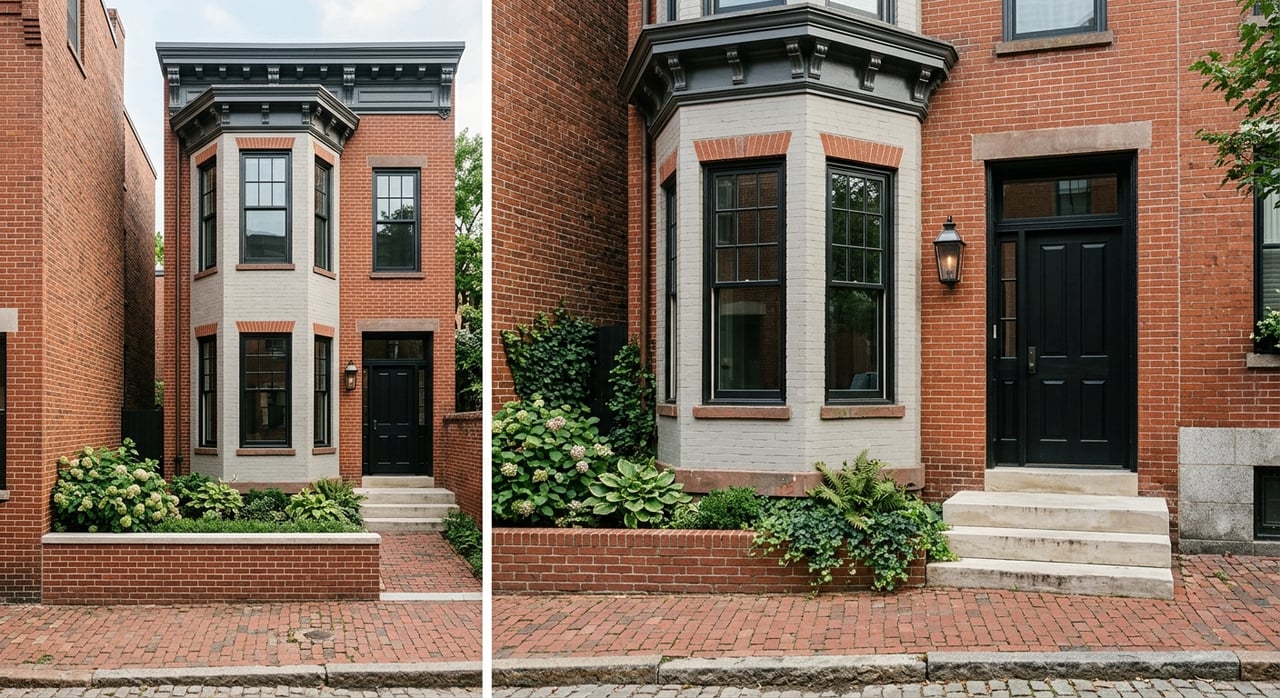
At the luxury level, DC and Northern Virginia offer very different physical environments. Central DC is defined by historic rowhouses, townhomes, apartment buildings, and larger mansions in established neighborhoods such as Georgetown, Dupont Circle, Sheridan-Kalorama, Foggy Bottom, West End, Cleveland Park, and Chevy Chase.
Northern Virginia, by contrast, gives you two distinct paths. Arlington tends to be more corridor-based and vertically mixed, while McLean is more low-density and estate-oriented outside its denser mixed-use pockets.
That means your decision is often less about price point and more about property type and daily experience. In simple terms, DC leans historic and urban, Arlington leans modern and connected, and McLean leans private and spacious.
Central DC is often the strongest fit if you want architecture with history, a walkable setting, and immediate access to restaurants, retail, and cultural activity. In Ward 2, Georgetown is described by the DC Office of Planning as one of the city’s most established shopping and restaurant areas, while neighborhoods like Sheridan-Kalorama and Dupont Circle are known for grand Victorian townhomes and stand-alone mansions.
Ward 3 adds another layer to the DC luxury picture. Areas such as Cleveland Park, Woodley Park, North Cleveland Park, Forest Hills, and the DC portion of Chevy Chase combine local commercial cores with apartment and townhouse clusters, with single-family homes farther out.
For many buyers, this creates a very appealing pattern. You may be able to enjoy a home with architectural character while still keeping many daily needs close at hand.
Luxury buyers often choose DC for its street-level energy and design character. If you value historic facades, mature streetscapes, and neighborhoods where dining, shopping, and daily errands can feel integrated into your routine, DC offers a strong advantage.
It also supports the strongest leave-the-car-parked lifestyle of the three options discussed here. Based on neighborhood and planning descriptions, central DC generally offers the most urban experience and the most immediate cultural access.
DC ownership can come with extra layers of review, especially if you are considering renovations or exterior changes. The city lists more than 27,000 protected properties across 50 historic districts, and Georgetown has a separate exterior review process under the Old Georgetown Act and Old Georgetown Board.
For luxury buyers and sellers, that matters. A beautiful historic property may offer tremendous character, but project planning, approvals, and resale preparation may require more careful coordination.
Arlington offers a different kind of luxury experience. It is more transit-oriented, more mixed in housing type, and often better suited to buyers who want a polished urban-suburban balance without fully stepping away from city access.
The county describes more than 60 neighborhoods and several major planning corridors, including Rosslyn-Ballston, Columbia Pike, Richmond Highway, and Langston Boulevard. Rosslyn is known as a skyline district of high-rise apartments and condos, Ballston as a major transportation hub with residences, offices, hotels, shops, restaurants, and open space, and Clarendon as a walkable mix of businesses, restaurants, offices, public art, and tree-lined streets.
Arlington often appeals to buyers who want convenience with a little more separation from DC’s constant intensity. It can feel more contemporary in housing stock and planning structure, particularly in neighborhoods shaped around Metro access and mixed-use development.
The housing profile helps explain that pattern. According to Arlington’s 2024 profile, 72.0% of housing units are multifamily, 22.3% are single-family detached, and 5.7% are single-family attached. That mix supports a luxury market that often includes condos, penthouses, and attached homes alongside detached options.
Arlington has the shortest mean travel time to work among the three areas compared in the research. Census QuickFacts reports a mean commute of 26.2 minutes in Arlington County, compared with 30.0 minutes in Washington, DC, and 28.9 minutes in Fairfax County.
That advantage is tied to planning. Arlington intentionally concentrated density around Metro stations in the Rosslyn-Ballston corridor, and county materials identify strong transit connections through Metrorail, Arlington Transit, and VRE access.
For many luxury buyers, this creates a practical sweet spot. You can get a more managed, transit-friendly suburban setting without giving up day-to-day connectivity.
If your priority is privacy, scale, and a more estate-like setting, McLean stands apart. Fairfax County’s McLean Planning District describes the area outside Tysons, the McLean Community Business Center, and the West Falls Church Transit Station Area as predominantly stable, low-density residential.
The same plan notes that single-family residences occupy nearly 70% of developed land. It also states that Potomac-adjacent low-density areas are generally limited to large-lot single-family uses.
McLean is often the clearest choice if you want more land, more separation, and a quieter residential environment. Compared with DC and many parts of Arlington, it is more oriented toward detached homes and less toward multifamily living.
That difference shapes everything from curb appeal to privacy. If you want a setting where the home and grounds play a bigger role in the luxury experience, McLean may feel like the most natural fit.
McLean is not disconnected, but access tends to be more selective and intentional. WMATA identifies McLean as a Silver Line station, and Fairfax County planning materials show that the district’s more walkable and mixed-use activity is concentrated in places like the community business center and Tysons.
In practical terms, this means transit can absolutely be part of the equation, but it is not the organizing principle across the full area. For many households, McLean works best when driving patterns, station access, or office routes are considered early in the search.
The clearest way to compare these markets is to think about what you want more of each day. Are you looking for neighborhood energy, a balanced rhythm, or privacy and space?
Here is the simplest breakdown:
| Area | Best Fit For | Typical Feel |
|---|---|---|
| Central DC | Buyers who want historic architecture, walkability, and urban energy | Active, architectural, highly walkable |
| Arlington | Buyers who want transit-oriented convenience and newer luxury options | Balanced, connected, polished |
| McLean | Buyers who want larger lots, privacy, and estate-style living | Quiet, spacious, more private |
For many clients, this table gets to the heart of the decision. You are not really choosing city versus suburb in the abstract. You are deciding how much daily activity you want to trade for how much space and separation.
Luxury buyers should also compare the practical side of ownership. Property tax structures differ across these jurisdictions, and that can materially affect carrying costs.
According to the research provided, DC’s residential real property tax rate is $0.85 per $100 of assessed value. Arlington County’s adopted 2026 rate is $1.053 per $100, while Fairfax County’s 2026 base rate is $1.12 per $100 plus a separate McLean Community Center levy of $0.023 per $100 for parcels in that district. Fairfax County also notes that not all rates apply to every parcel, so parcel-specific verification matters.
This is one reason cross-border luxury decisions deserve careful advisory support. You are comparing not just homes, but tax structures, planning rules, preservation review, commute systems, and the realities of day-to-day ownership.
If you are selling a luxury property in DC or Northern Virginia, the same location differences that matter to buyers should shape your strategy. A historic DC residence may need especially thoughtful positioning around architecture, preservation context, and lifestyle access.
An Arlington property may benefit from emphasizing transit convenience, lock-and-leave ease, and modern living. In McLean, presentation may center more on privacy, scale, land, and the overall estate experience.
For design-conscious sellers, these distinctions matter. The most effective marketing is not generic. It should reflect what buyers are truly seeking in that specific location and property type.
A smart luxury search usually starts with honest priorities. Before focusing on finishes or square footage, it helps to define how you want your home to function in real life.
Ask yourself:
When you answer those questions clearly, the right geography often becomes easier to identify. In this market, the most successful decisions usually come from matching the property to the lifestyle, not just the wishlist.
Whether you are preparing to buy in DC, Arlington, or McLean, or positioning a property for sale, the details matter. Advisory Partners offers discreet, design-informed guidance across the DMV to help you compare options, refine your strategy, and move forward with confidence.
Stay up to date on the latest real estate trends.


Inventory, demand, and the spring outlook

The Case for Washington — and Why the Fundamentals Still Hold
When you work with Advisory Partners, you’re not just hiring a real estate advisory team—you’re gaining trusted partners committed to a deeply personalized, highly professional experience. Whether you’re a first-time homebuyer, a growing family, an investor, or a seasoned executive, the team’s expertise ensures your real estate journey is seamless, strategic, and successful from start to finish.